
tobook · Hospitality and booking
Case study
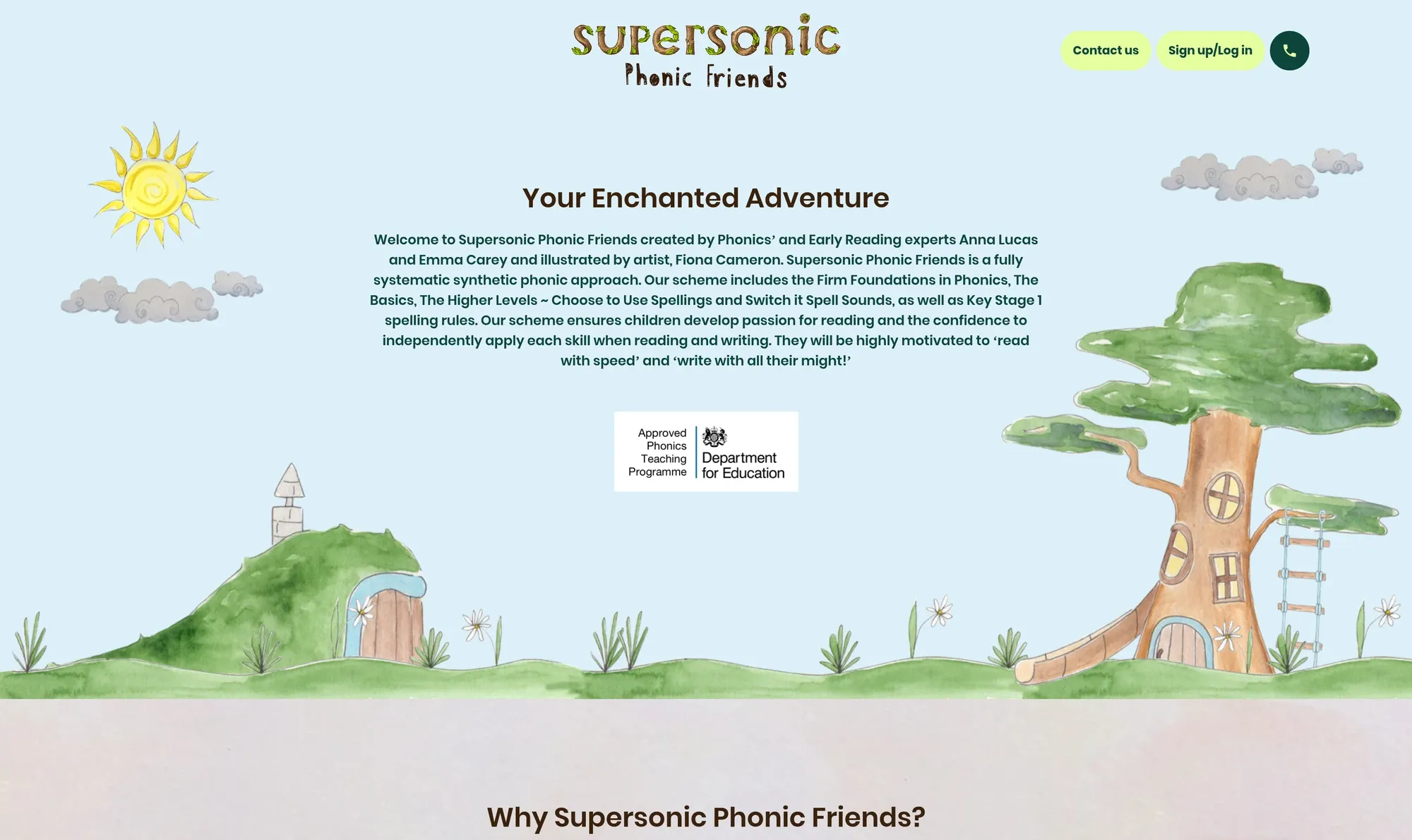
Rebuilding a phonics platform in time for the new school year
We rebuilt a phonics platform's navigation, search and billing for the September term, then moved the site and its resources to AWS with no downtime.
- Client

- Industry
- Education
- Deadline
- Live for the September term
Resources · last 90 days
4.2 TB
of phonics resources delivered
Results
The results
Live for September
the one date that couldn't move
Navigation and search went live well ahead of launch, so they had real use behind them before the term started.
5,000+
lessons and resources, all searchable
One search box across the whole library, filtered by year group, font style and resource type.
Zero
downtime moving the site and its resources
Schools kept using the site throughout the move, and every release since has gone out with no downtime.
The challenge
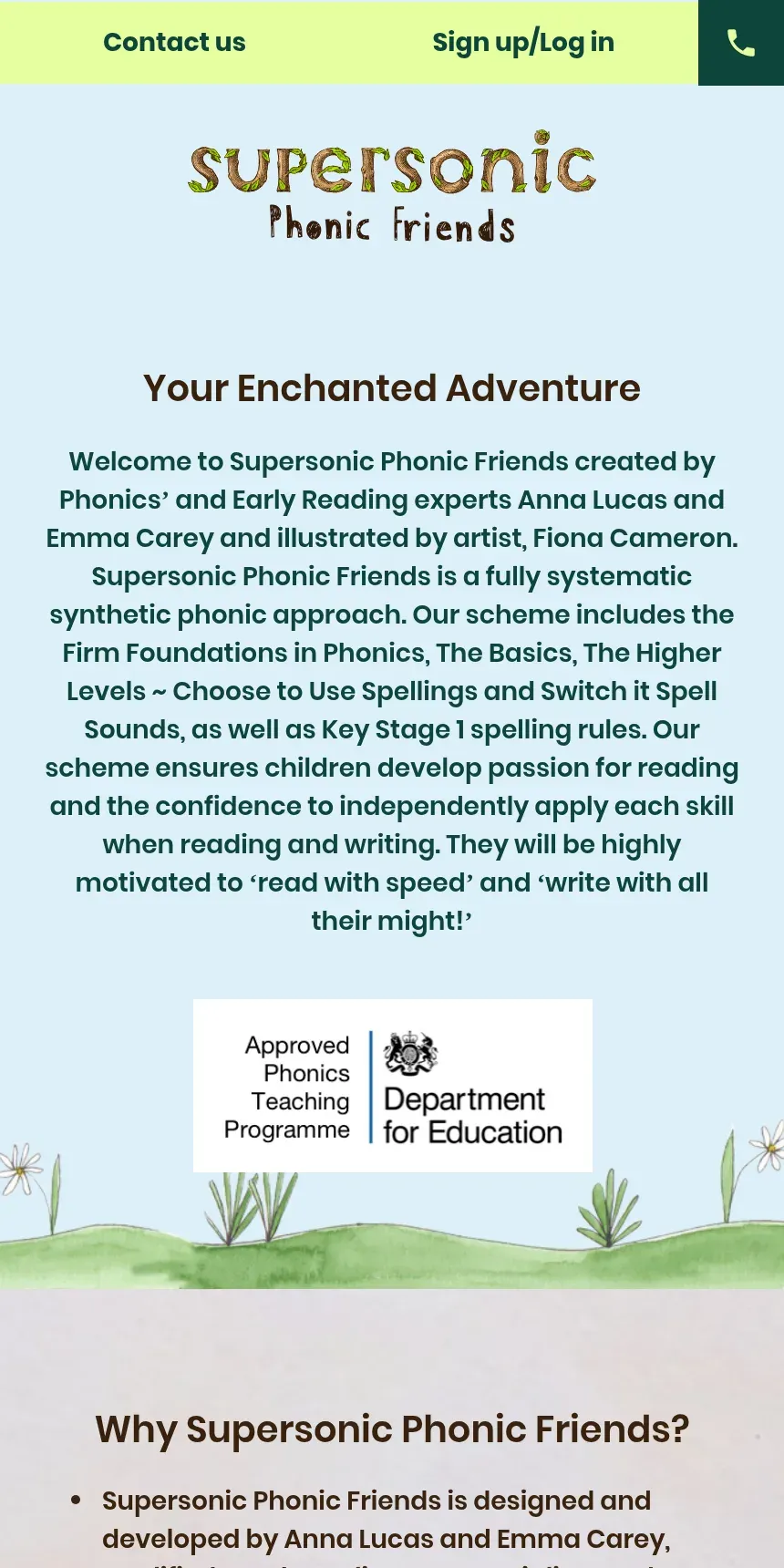
Supersonic Phonic Friends publishes a systematic phonics programme used across primary schools: lesson sequences, teaching resources and the printable material that goes with them. Teachers use it mid-term, with a class waiting.
The old site had plenty of content but made it hard to find. There was also a fixed deadline, because schools buy a phonics programme in the summer and use it from the first week of September.
What we did
We agreed the running order with the client before writing any code. Schools notice findability first, so navigation and search went first. They shipped well ahead of launch, which meant they had real use behind them before the term that mattered.
The old menu asked teachers to think in website terms. The new one uses the scheme’s own language. It opens into three linked columns that go from phase to group to individual sounds, and each sound has its own artwork so it can be recognised at a glance. Where a branch would only repeat itself, the column collapses. On a phone the same columns become a stack you step into and back out of.
Search is in the header on every page. Suggestions appear as you type, over a plain form that still works if the scripts don’t load. Results are split into lessons and resources, with a count on each, and the filters for year group, font style and resource type stay applied as you move between them.
To make that work we first had to fix the data underneath. Year groups and handwriting styles had been written into file titles as codes that only made sense to the person who typed them. We turned those into proper tags and backfilled the existing library automatically, so the team didn’t have to retype every title by hand.
After that came resource previews, so a teacher can see what they’re about to download, and a contact route that doesn’t need an email address.
Billing that matches how schools buy
A school doesn’t buy the way a consumer does. There’s a budget holder, a purchase order and an invoice, and the person choosing the resource is rarely the person approving the spend.
We moved the platform’s billing to match, with invoice and purchase order first and no automatic card renewal arriving without warning. It was more a commercial change than a technical one, and it removed a whole category of awkward conversations.
Hosting and infrastructure
The platform now runs on infrastructure described entirely in code: eleven separate parts, each with one job and each able to be recreated exactly. A managed firewall filters out unwanted traffic.
Moving the site with no downtime
The plan in June allowed for 20 to 30 minutes offline over a weekend. In the end we moved the whole site and its resource library across with no downtime, and no customer was affected.
Every release since has gone out the same way, with no downtime and nothing for schools to notice. When the database needed an upgrade in October, we allowed 15 minutes offline. It took 2 minutes 40 seconds and no customer reported a problem.
How we work with Supersonic Phonic Friends
Requests go into a shared channel and get an answer the same day. Changes ship on a regular cadence, and there’s a named engineer who knows the platform. An assessment tool is next.
How it went
From plan to launch
One summer, one deadline and a clear order of work agreed with the client before we started.
We started with what schools find hard
The first problem was finding things. Teachers couldn't navigate quickly to the right phase or resource, and the landing page wasn't working as a hub. That set the running order.
Navigation and search first
A menu that works on every device and real search across lessons and resources, shipped well ahead of launch so they had a full term's worth of testing behind them.
Resource previews
Teachers can now see what a resource is before they download it, so they can pick the right lesson pack.
Billing rebuilt around purchase orders
Schools buy on invoice and purchase order, on a budget cycle that someone else approves. We moved billing to match, with no automatic card renewals.
New infrastructure, built in code
Eleven separate parts of the platform, including the network, data, delivery, firewall, backups and staging, each described in code and each protected against accidental deletion.
We moved it across with no downtime
The whole site and its resource library moved onto the new platform while teachers kept using it. No customer was affected or had to be warned.
Live for the September term
The site went live for the September term and now ships on a regular release cadence, with no downtime on any release so far. An assessment tool is next.
Technology
What holds up when a school year starts
September brings the year's peak traffic within a fortnight, and the platform is built for that week.
Edge
Traffic is filtered before it reaches the site
All traffic passes through a global delivery network with a managed firewall in front of the application. Automated login attempts are rate-limited and the routes that only attackers would use are closed.
- Global delivery network
- Managed web firewall
- Automated logins rate-limited
Caching
Pages are already built before they're asked for
A full-page cache sits between the internet and the application, so thirty teachers opening the same phonics lesson cost roughly what one teacher costs. The application only does work that is new.
- Full-page caching
- Built once, served many
- Tuned for the September peak
Data
A month of daily restores, a year of monthly ones
A managed database with automated backups, plus a separate backup regime that keeps daily restore points for 35 days and monthly ones for a year. Each one is a restore we could perform.
- Managed database
- 35 days of daily restores
- 365 days of monthly restores
Release
Staging, previews and protection from accidental deletion
Infrastructure and application both deploy from code through a pipeline, with a staging environment and per-branch previews. Every part of the live platform carries deletion protection, so no single mistaken command can take it down.
- Infrastructure in code
- Zero-downtime releases
- Deletion protection throughout
Scale
What the platform carried over 90 days
The new site went live in September 2026, at the start of the school year.
- requests served in 90 days
- 10.1M
- of phonics resources delivered
- 4.2 TB
- parts of the platform defined in code
- 11
Measured across supersonicphonicfriends.co.uk over the 90 days to 23 September 2026.
More work
Other case studies
Mrs Mactivity · Education technology
18 months of building, hosting and running an education platform
Read the case studyRiver Global PLC · Financial services
Separating a listed company's website from the business that was sold
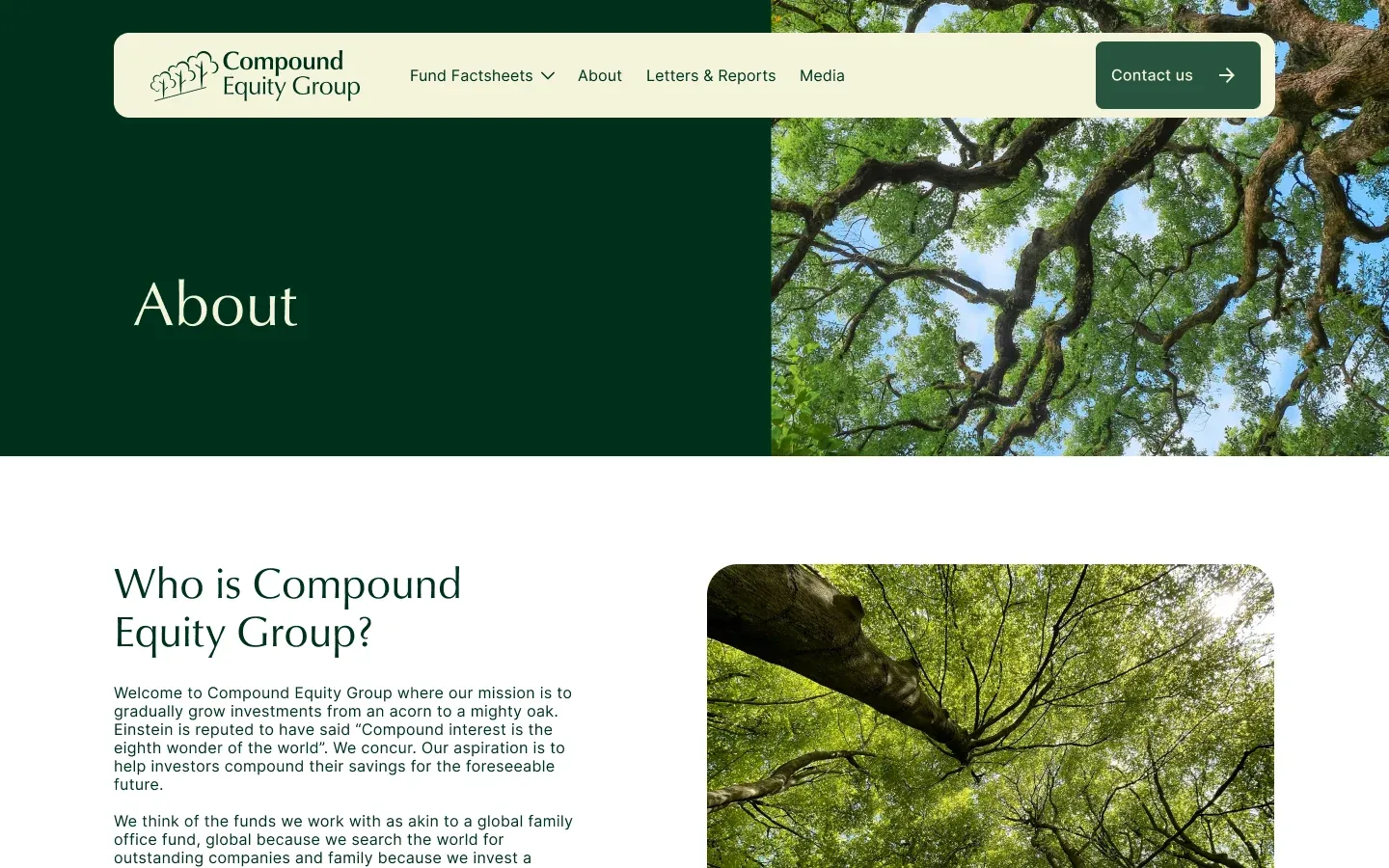
Read the case studyCompound Equity Group · Financial services
A brand and website design for a new investment group
Read the case study


Have a project in mind?
Tell us what you need and we'll reply within one working day. Once it's sent, you can book a free 30-minute call with Louie, our founder, and we'll follow up with a written quote.